
Your child’s first orthodontic visit is a simple evaluation that checks tooth alignment, bite, and jaw development. The American Association of Orthodontists recommends children have their first orthodontic check-up by age 7, which is when South Shore parents typically schedule that initial evaluation. At this age, your child has enough permanent teeth for an orthodontist to spot developing issues like crossbites, crowding, or jaw growth problems. This visit is informational, not a commitment to treatment, and most practices offer it as a free consult.
What Is a First Orthodontic Visit?
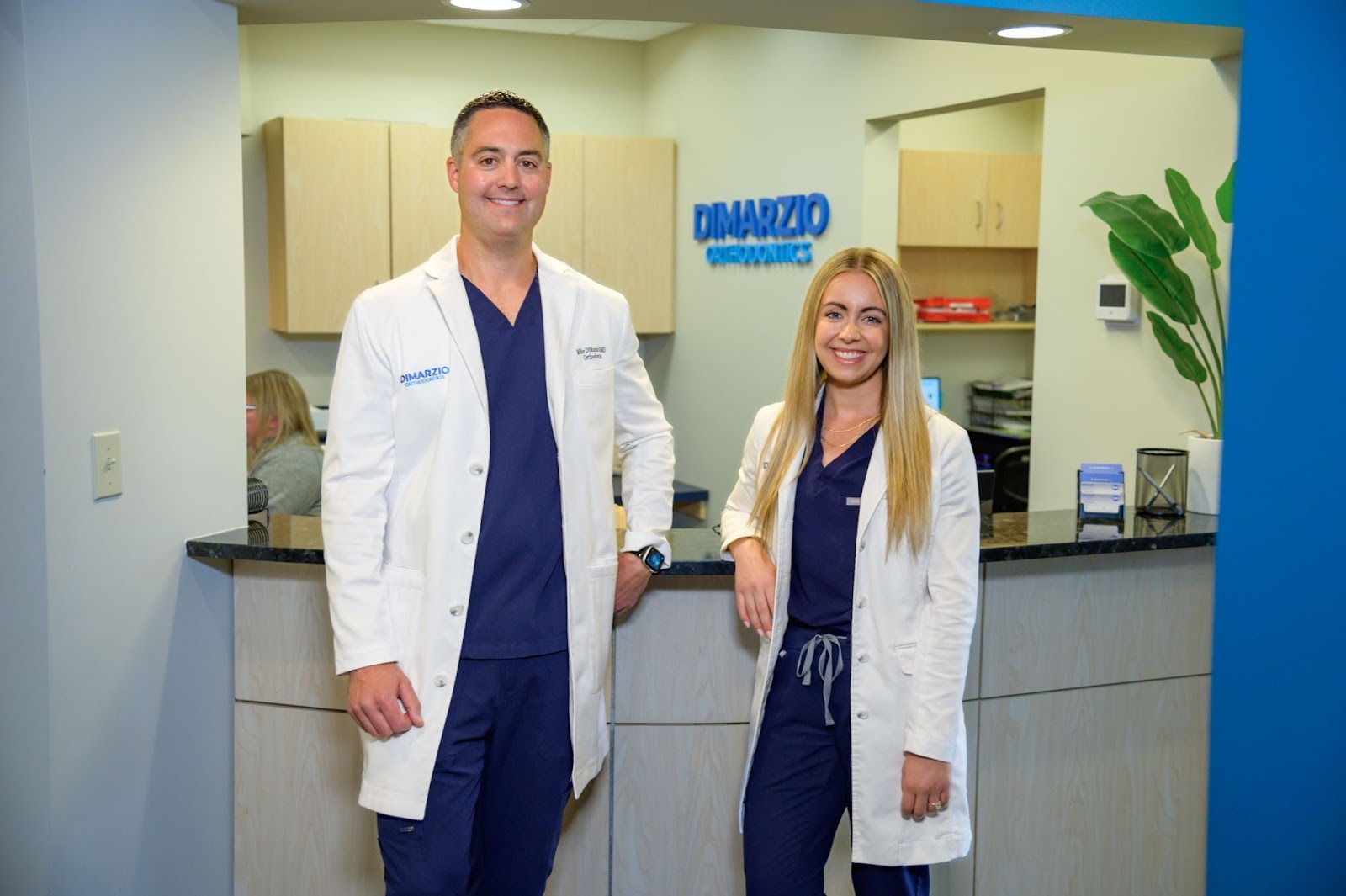
Many parents are surprised to learn their child should see an orthodontist years before all their permanent teeth come in. By age 7, small problems with jaw growth and emerging teeth can be spotted while your child still has some baby teeth. This early look gives board-certified orthodontists Dr. DiMarzio and Dr. Marczak the chance to monitor growth and step in at exactly the right time.
What Happens During the First Orthodontic Visit?
The first free consultation visit at DiMarzio Orthodontics follows a welcoming, pressure-free process designed to put both you and your child at ease.
Welcome and History Review
Your team will greet you and review your child’s medical and dental history. This helps your orthodontist understand any past dental work, breathing issues, or habits that might affect treatment.
Clinical Examination
Dr. DiMarzio or Dr. Marczak will complete a thorough visual exam of your child’s teeth, gums, jaw, and bite. They’re looking at how teeth fit together, whether the jaw is developing evenly, and if there’s enough room for incoming permanent teeth.
Imaging When Needed
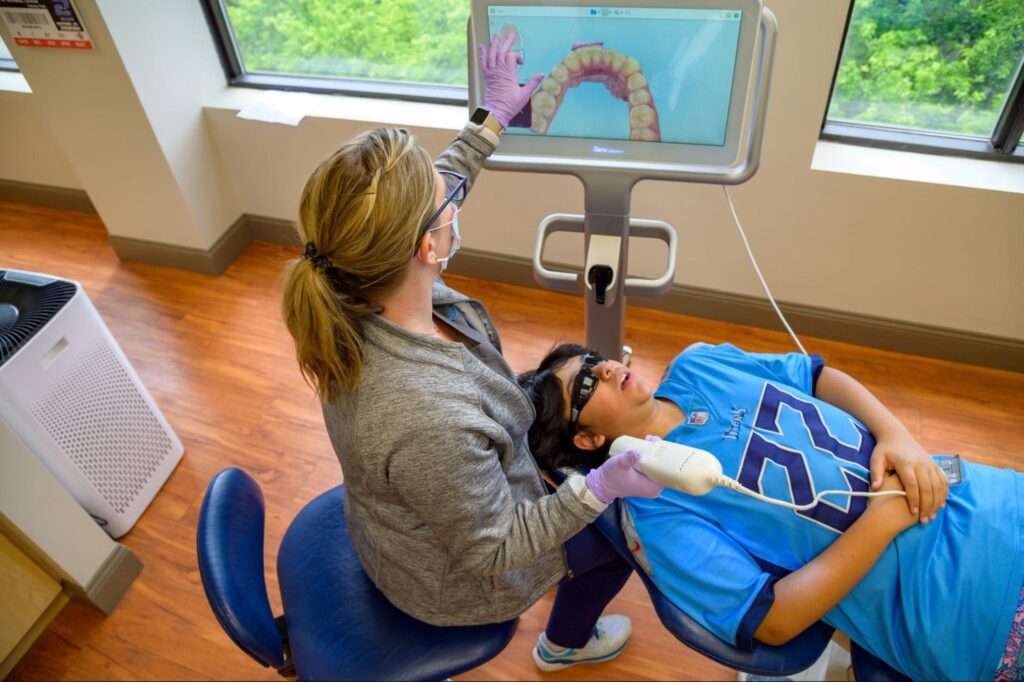
Digital X-rays or photos may be taken to see what’s happening beneath the surface. These images show tooth roots, unerupted teeth, and bone structure that aren’t visible during a regular exam.
Plain-Language Discussion
After the exam, Dr. DiMarzio or Dr. Marczak will sit down with you and your child to explain the findings in everyday terms. No confusing jargon, just honest information about what they see.
Personalized Recommendation
Based on the evaluation, you’ll receive one of three recommendations:
- Monitor: Schedule periodic check-ins to watch growth patterns
- Early treatment: Begin Phase 1 care to address specific issues now
- Wait for full treatment: Plan for full treatment once more permanent teeth erupt
The entire visit typically takes 30 to 45 minutes, and you’ll leave with a clear understanding of your child’s smile development.
Benefits of an Early Orthodontic Evaluation
Catching orthodontic issues early can make a real difference in your child’s treatment experience and results. Many South Shore families discover that an age 7 visit answers questions they didn’t even know to ask. Here’s why the American Association of Orthodontists recommends that age 7 evaluation:
- Guides jaw development: While bones are still growing, your orthodontist can influence how the upper and lower jaws develop and fit together
- Creates space for permanent teeth: Early intervention can help guide incoming teeth into better positions, reducing future crowding
- Prevents extractions: Addressing crowding early sometimes eliminates the need to remove permanent teeth later
- Can avoid surgery: Some jaw discrepancies are easier to correct in growing children than in teens or adults
- Corrects harmful habits: Thumb sucking, tongue thrust, and mouth breathing can reshape the jaw and teeth, so early treatment helps break these patterns
- Supports overall development: Proper alignment helps with clear speech, comfortable chewing, and breathing
- Builds confidence: Kids who feel good about their smiles tend to smile more
Early Treatment vs. Waiting: How Orthodontists Decide
Not every child who visits an orthodontist at age 7 needs treatment right away. Board-certified Dr. DiMarzio and Dr. Marczak will recommend the approach that gives your child the best outcome with the least amount of intervention. Families across the South Shore appreciate this conservative philosophy, which avoids unnecessary care while still catching issues early.
| Approach | Typical Age | What It Addresses | Duration |
|---|---|---|---|
| Phase 1 (Early Treatment) | Ages 7-10 | Crossbites, severe crowding, jaw growth issues, harmful habits | 6-18 months |
| Monitoring | Ages 7-10+ | Mild issues that may self-correct or need treatment later | Check-ups every 6-12 months |
| Phase 2 (Full Treatment) | Ages 11+ | Full alignment of permanent teeth, bite refinement | 12-24 months |
When Early Treatment Makes Sense
Phase 1 treatment addresses problems that are easier to fix while your child is still growing. Crossbites, underbites, and severe crowding often respond better to early intervention. Expanders, partial braces, or other appliances can guide jaw growth and create room for permanent teeth.
When Waiting Is the Right Call
Many children benefit most from waiting until more permanent teeth erupt. If your child’s issues are primarily cosmetic or related to tooth alignment rather than jaw development, full treatment in the early teen years often delivers great results in a single phase.
The Monitoring Approach
Sometimes the best treatment is no treatment yet. Your orthodontist may recommend regular check-ins to track how your child’s teeth and jaws are developing. This watchful waiting ensures treatment begins at the ideal moment, not too early and not too late.
What Affects the Cost of Children’s Orthodontic Care?
Children’s orthodontic costs depend on treatment type, complexity, duration, and insurance coverage. The first free consultation visit is often complimentary, giving you valuable information about your child’s smile development at no cost. South Shore families looking at care options will find that several factors shape the total investment when treatment is recommended.
Treatment Type
Metal braces, clear braces, Invisalign, and specialized appliances like expanders each come with different costs. Your orthodontist will recommend the option that best addresses your child’s specific needs.
Complexity and Duration
A straightforward case requiring 12 months of treatment costs less than a complex case spanning two phases over several years. The severity of crowding, bite issues, and jaw discrepancies all play a role.
Insurance Coverage
Many dental insurance plans include orthodontic benefits for children. Most plans cover a meaningful chunk of the treatment cost up to a lifetime maximum, and your team can help you understand exactly what your policy includes.
Flexible Payment Options
Most orthodontic practices offer payment plans that spread costs over the treatment period. HSA and FSA funds can also help offset out-of-pocket expenses, making quality care accessible for your family.
During your free consult, you’ll receive a clear breakdown of costs and payment options, so you know what to expect.
Signs Your Child May Need Orthodontic Care
You don’t need to wait for obvious crooked teeth to schedule an evaluation. The team at DiMarzio Orthodontics often hears from South Shore parents who notice subtle changes long before crooked teeth become obvious. Some signs that suggest your child could benefit from an orthodontic check-up include:
Tooth Development Patterns
- Baby teeth that fall out very early or very late
- Permanent teeth that seem slow to come in
- Crowded, overlapping, or blocked-out teeth
- Gaps that seem unusually large
Functional Concerns
- Difficulty biting or chewing food
- Teeth that don’t come together properly when biting down
- Jaws that shift, click, or make popping sounds
- Speech difficulties or lisping
Breathing and Habits
- Chronic mouth breathing, especially during sleep
- Snoring or restless sleep
- Thumb sucking or finger sucking past age 5
- Tongue thrusting when swallowing
Facial Observations
- Facial asymmetry or imbalance
- Protruding teeth
- A chin that seems too far forward or too far back
- Cheek biting or lip biting
If you notice any of these signs, scheduling a free consult gives you peace of mind and a clear path forward.
Frequently Asked Questions
At what age should my child first see an orthodontist?
The American Association of Orthodontists recommends children have their first orthodontic evaluation by age 7. By this age, enough permanent teeth have emerged for an orthodontist to identify developing issues. Early evaluation doesn’t always mean early treatment. It simply gives your orthodontist the opportunity to monitor growth and recommend the ideal time to begin.
Will my child need braces after the first visit?
Not necessarily. Many children who come in at age 7 don’t need immediate treatment. Dr. DiMarzio or Dr. Marczak may recommend monitoring your child’s development with periodic check-ins until the right time for treatment. Others may benefit from early intervention, while some can wait for full treatment in their teen years.
How long does a first orthodontic appointment take?
Plan for about 30 to 45 minutes. This gives your team time to review your child’s history, complete a thorough examination, take any needed images, and discuss findings with you. You’ll leave with a clear understanding of your child’s orthodontic needs and recommended next steps.
Does my child need a referral from the dentist?
No referral is necessary. While many dentists do refer patients to orthodontists, you’re welcome to schedule a consultation directly. Your child should continue seeing their regular dentist for cleanings and check-ups throughout any orthodontic treatment.
What should we bring to the first visit?
Bring your dental insurance card if you have orthodontic coverage, and any recent dental X-rays if available. A list of your child’s current medications and relevant medical history is helpful. Most importantly, bring your questions. Your team wants to make sure you leave feeling informed and confident.
Is the first consultation really free?
Yes. Many orthodontic practices, including DiMarzio Orthodontics, offer complimentary initial consultations. This allows you to get expert insight into your child’s smile development without any financial commitment. You’ll receive honest information about whether treatment is needed and what your options are.
Knowing what to expect at that first visit makes it easier for South Shore parents to feel prepared, ask the right questions, and support their child through every stage of smile development. Whether your child needs treatment now, later, or simply periodic monitoring, an early evaluation gives your family the information needed to make confident decisions about healthy, confident smiles down the line.
Your child’s first orthodontic visit is a simple evaluation that checks tooth alignment, bite, and jaw development. The American Association of Orthodontists recommends children have their first orthodontic check-up by age 7, which is when South Shore parents typically schedule that initial evaluation. At this age, your child has enough permanent teeth for an orthodontist to spot developing issues like crossbites, crowding, or jaw growth problems. This visit is informational, not a commitment to treatment, and most practices offer it as a free consult.
What Is a First Orthodontic Visit?
Many parents are surprised to learn their child should see an orthodontist years before all their permanent teeth come in. By age 7, small problems with jaw growth and emerging teeth can be spotted while your child still has some baby teeth. This early look gives board-certified orthodontists Dr. DiMarzio and Dr. Marczak the chance to monitor growth and step in at exactly the right time.
What Happens During the First Orthodontic Visit?
The first free consultation visit at DiMarzio Orthodontics follows a welcoming, pressure-free process designed to put both you and your child at ease.
Welcome and History Review
Your team will greet you and review your child’s medical and dental history. This helps your orthodontist understand any past dental work, breathing issues, or habits that might affect treatment.
Clinical Examination
Dr. DiMarzio or Dr. Marczak will complete a thorough visual exam of your child’s teeth, gums, jaw, and bite. They’re looking at how teeth fit together, whether the jaw is developing evenly, and if there’s enough room for incoming permanent teeth.
Imaging When Needed
Digital X-rays or photos may be taken to see what’s happening beneath the surface. These images show tooth roots, unerupted teeth, and bone structure that aren’t visible during a regular exam.
Plain-Language Discussion
After the exam, Dr. DiMarzio or Dr. Marczak will sit down with you and your child to explain the findings in everyday terms. No confusing jargon, just honest information about what they see.
Personalized Recommendation
Based on the evaluation, you’ll receive one of three recommendations:
- Monitor: Schedule periodic check-ins to watch growth patterns
- Early treatment: Begin Phase 1 care to address specific issues now
- Wait for full treatment: Plan for full treatment once more permanent teeth erupt
The entire visit typically takes 30 to 45 minutes, and you’ll leave with a clear understanding of your child’s smile development.
Benefits of an Early Orthodontic Evaluation
Catching orthodontic issues early can make a real difference in your child’s treatment experience and results. Many South Shore families discover that an age 7 visit answers questions they didn’t even know to ask. Here’s why the American Association of Orthodontists recommends that age 7 evaluation:
- Guides jaw development: While bones are still growing, your orthodontist can influence how the upper and lower jaws develop and fit together
- Creates space for permanent teeth: Early intervention can help guide incoming teeth into better positions, reducing future crowding
- Prevents extractions: Addressing crowding early sometimes eliminates the need to remove permanent teeth later
- Can avoid surgery: Some jaw discrepancies are easier to correct in growing children than in teens or adults
- Corrects harmful habits: Thumb sucking, tongue thrust, and mouth breathing can reshape the jaw and teeth, so early treatment helps break these patterns
- Supports overall development: Proper alignment helps with clear speech, comfortable chewing, and breathing
- Builds confidence: Kids who feel good about their smiles tend to smile more
Early Treatment vs. Waiting: How Orthodontists Decide
Not every child who visits an orthodontist at age 7 needs treatment right away. Board-certified Dr. DiMarzio and Dr. Marczak will recommend the approach that gives your child the best outcome with the least amount of intervention. Families across the South Shore appreciate this conservative philosophy, which avoids unnecessary care while still catching issues early.
| Approach | Typical Age | What It Addresses | Duration |
|---|---|---|---|
| Phase 1 (Early Treatment) | Ages 7-10 | Crossbites, severe crowding, jaw growth issues, harmful habits | 6-18 months |
| Monitoring | Ages 7-10+ | Mild issues that may self-correct or need treatment later | Check-ups every 6-12 months |
| Phase 2 (Full Treatment) | Ages 11+ | Full alignment of permanent teeth, bite refinement | 12-24 months |
When Early Treatment Makes Sense
Phase 1 treatment addresses problems that are easier to fix while your child is still growing. Crossbites, underbites, and severe crowding often respond better to early intervention. Expanders, partial braces, or other appliances can guide jaw growth and create room for permanent teeth.
When Waiting Is the Right Call
Many children benefit most from waiting until more permanent teeth erupt. If your child’s issues are primarily cosmetic or related to tooth alignment rather than jaw development, full treatment in the early teen years often delivers great results in a single phase.
The Monitoring Approach
Sometimes the best treatment is no treatment yet. Your orthodontist may recommend regular check-ins to track how your child’s teeth and jaws are developing. This watchful waiting ensures treatment begins at the ideal moment, not too early and not too late.
What Affects the Cost of Children’s Orthodontic Care?
Children’s orthodontic costs depend on treatment type, complexity, duration, and insurance coverage. The first free consultation visit is often complimentary, giving you valuable information about your child’s smile development at no cost. South Shore families looking at care options will find that several factors shape the total investment when treatment is recommended.
Treatment Type
Metal braces, clear braces, Invisalign, and specialized appliances like expanders each come with different costs. Your orthodontist will recommend the option that best addresses your child’s specific needs.
Complexity and Duration
A straightforward case requiring 12 months of treatment costs less than a complex case spanning two phases over several years. The severity of crowding, bite issues, and jaw discrepancies all play a role.
Insurance Coverage
Many dental insurance plans include orthodontic benefits for children. Most plans cover a meaningful chunk of the treatment cost up to a lifetime maximum, and your team can help you understand exactly what your policy includes.
Flexible Payment Options
Most orthodontic practices offer payment plans that spread costs over the treatment period. HSA and FSA funds can also help offset out-of-pocket expenses, making quality care accessible for your family.
During your free consult, you’ll receive a clear breakdown of costs and payment options, so you know what to expect.
Signs Your Child May Need Orthodontic Care
You don’t need to wait for obvious crooked teeth to schedule an evaluation. The team at DiMarzio Orthodontics often hears from South Shore parents who notice subtle changes long before crooked teeth become obvious. Some signs that suggest your child could benefit from an orthodontic check-up include:
Tooth Development Patterns
- Baby teeth that fall out very early or very late
- Permanent teeth that seem slow to come in
- Crowded, overlapping, or blocked-out teeth
- Gaps that seem unusually large
Functional Concerns
- Difficulty biting or chewing food
- Teeth that don’t come together properly when biting down
- Jaws that shift, click, or make popping sounds
- Speech difficulties or lisping
Breathing and Habits
- Chronic mouth breathing, especially during sleep
- Snoring or restless sleep
- Thumb sucking or finger sucking past age 5
- Tongue thrusting when swallowing
Facial Observations
- Facial asymmetry or imbalance
- Protruding teeth
- A chin that seems too far forward or too far back
- Cheek biting or lip biting
If you notice any of these signs, scheduling a free consult gives you peace of mind and a clear path forward.
Frequently Asked Questions
At what age should my child first see an orthodontist?
The American Association of Orthodontists recommends children have their first orthodontic evaluation by age 7. By this age, enough permanent teeth have emerged for an orthodontist to identify developing issues. Early evaluation doesn’t always mean early treatment. It simply gives your orthodontist the opportunity to monitor growth and recommend the ideal time to begin.
Will my child need braces after the first visit?
Not necessarily. Many children who come in at age 7 don’t need immediate treatment. Dr. DiMarzio or Dr. Marczak may recommend monitoring your child’s development with periodic check-ins until the right time for treatment. Others may benefit from early intervention, while some can wait for full treatment in their teen years.
How long does a first orthodontic appointment take?
Plan for about 30 to 45 minutes. This gives your team time to review your child’s history, complete a thorough examination, take any needed images, and discuss findings with you. You’ll leave with a clear understanding of your child’s orthodontic needs and recommended next steps.
Does my child need a referral from the dentist?
No referral is necessary. While many dentists do refer patients to orthodontists, you’re welcome to schedule a consultation directly. Your child should continue seeing their regular dentist for cleanings and check-ups throughout any orthodontic treatment.
What should we bring to the first visit?
Bring your dental insurance card if you have orthodontic coverage, and any recent dental X-rays if available. A list of your child’s current medications and relevant medical history is helpful. Most importantly, bring your questions. Your team wants to make sure you leave feeling informed and confident.
Is the first consultation really free?
Yes. Many orthodontic practices, including DiMarzio Orthodontics, offer complimentary initial consultations. This allows you to get expert insight into your child’s smile development without any financial commitment. You’ll receive honest information about whether treatment is needed and what your options are.
Knowing what to expect at that first visit makes it easier for South Shore parents to feel prepared, ask the right questions, and support their child through every stage of smile development. Whether your child needs treatment now, later, or simply periodic monitoring, an early evaluation gives your family the information needed to make confident decisions about healthy, confident smiles down the line.